


 Sell on Robu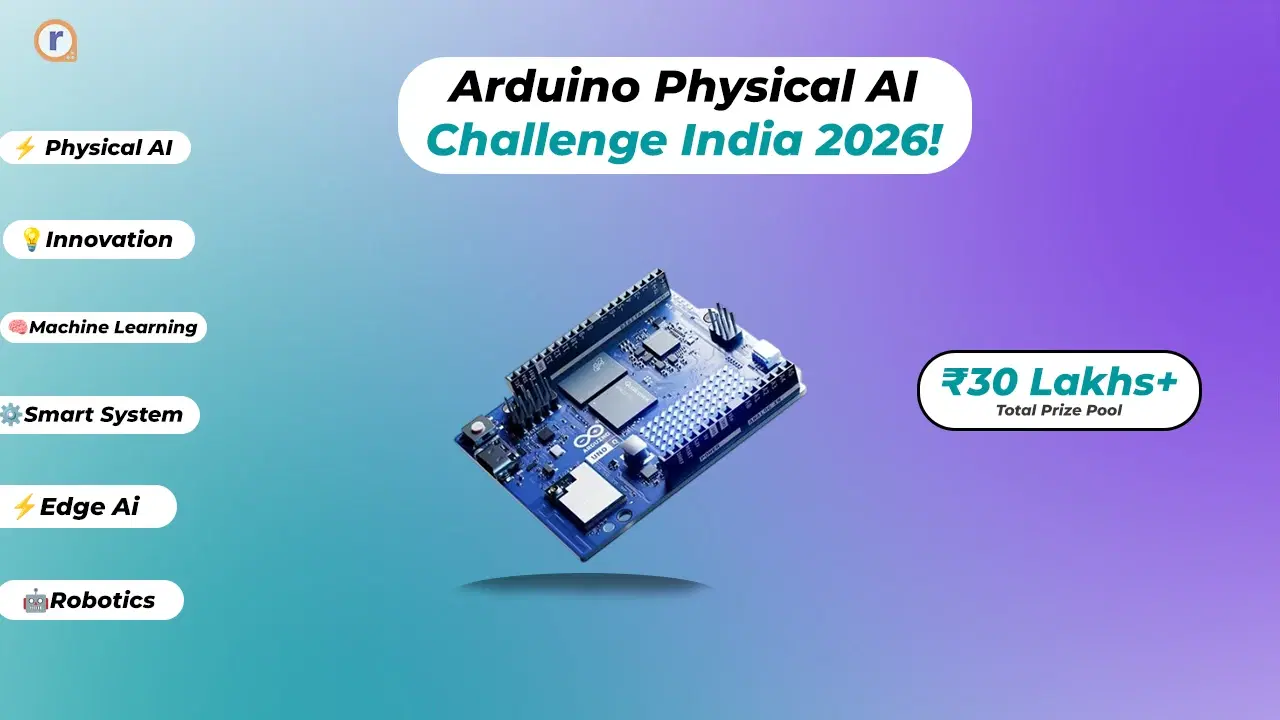


Arduino Physical AI Challenge india 2026 India’s hardware innovation ecosystem is evolving faster than ever. From robotics and automation to smart homes and edge AI, students, makers, startups, and engineers are building intelligent systems that interact with the real world.
To encourage the next generation of students, makers, and innovators to build cutting-edge physical AI projects using the Arduino UNO Q platform. The competition is supported by Title Sponsor Arduino, Technology Partner Qualcomm, Media Partner EFY, and Ecosystem Partner KSUM, offering a total prize pool of Rs. 30 Lakhs+ along with mentorship opportunities, laptops, and national recognition.
A nationwide innovation competition focused on building real-world physical AI systems using the Arduino UNO Q platform.
With a prize pool worth Rs. 30 lakhs+, mentorship opportunities, Snapdragon-powered devices, national recognition, and industry exposure,
This challenge is designed to help creators turn ideas into impactful working prototypes.
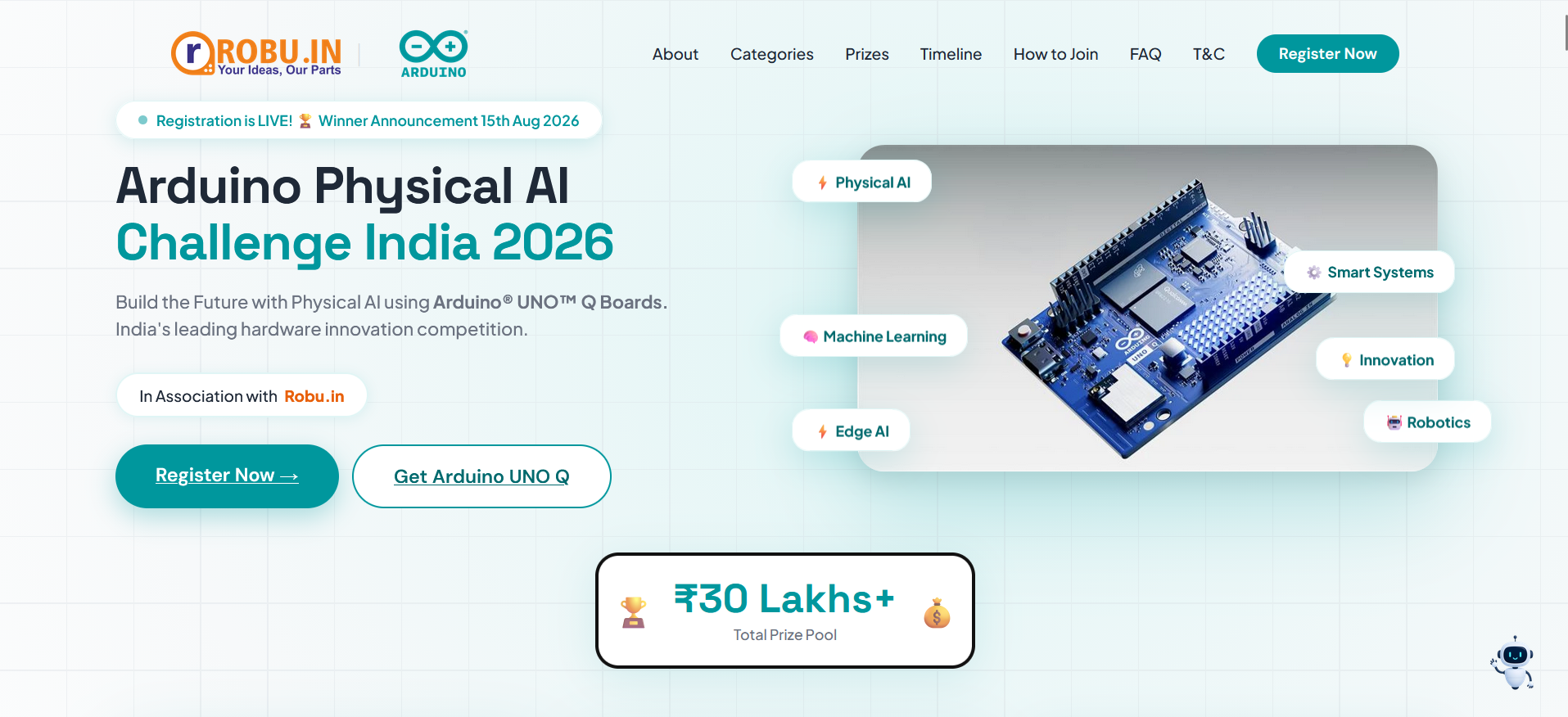
What is the Arduino Physical AI Challenge India 2026?
The Arduino Physical AI Challenge India 2026 is India’s leading hardware innovation competition focused on physical AI.
Unlike software-only hackathons, this challenge encourages participants to build intelligent hardware systems that interact with the physical world using:
-
Sensors
-
Robotics
-
Automation
-
Embedded systems
-
Edge AI
-
IoT systems
-
Human-machine interaction
Participants must build their projects using the Arduino UNO Q as the core platform.
The competition is open to:
-
School students
-
College students
-
Makers and hobbyists
-
Developers
-
Startups
-
Tech creators
-
AI enthusiasts
Whether you are building a smart robot, AI-powered automation system, gesture-controlled device, industrial monitoring system, or intelligent gaming interface—this competition gives you a platform to showcase your innovation.
Why This Competition Matters
India is rapidly adopting AI, robotics, automation, and edge computing technologies.
However, real innovation happens when AI interacts with the physical world.
That’s where physical AI becomes important.
Instead of just building chatbots or software apps, participants will create systems capable of:
-
Sensing environments
-
Processing real-world data
-
Making intelligent decisions
-
Triggering actions
-
Interacting with humans and machines
This competition aims to encourage practical engineering and hands-on innovation.
What is physical AI?
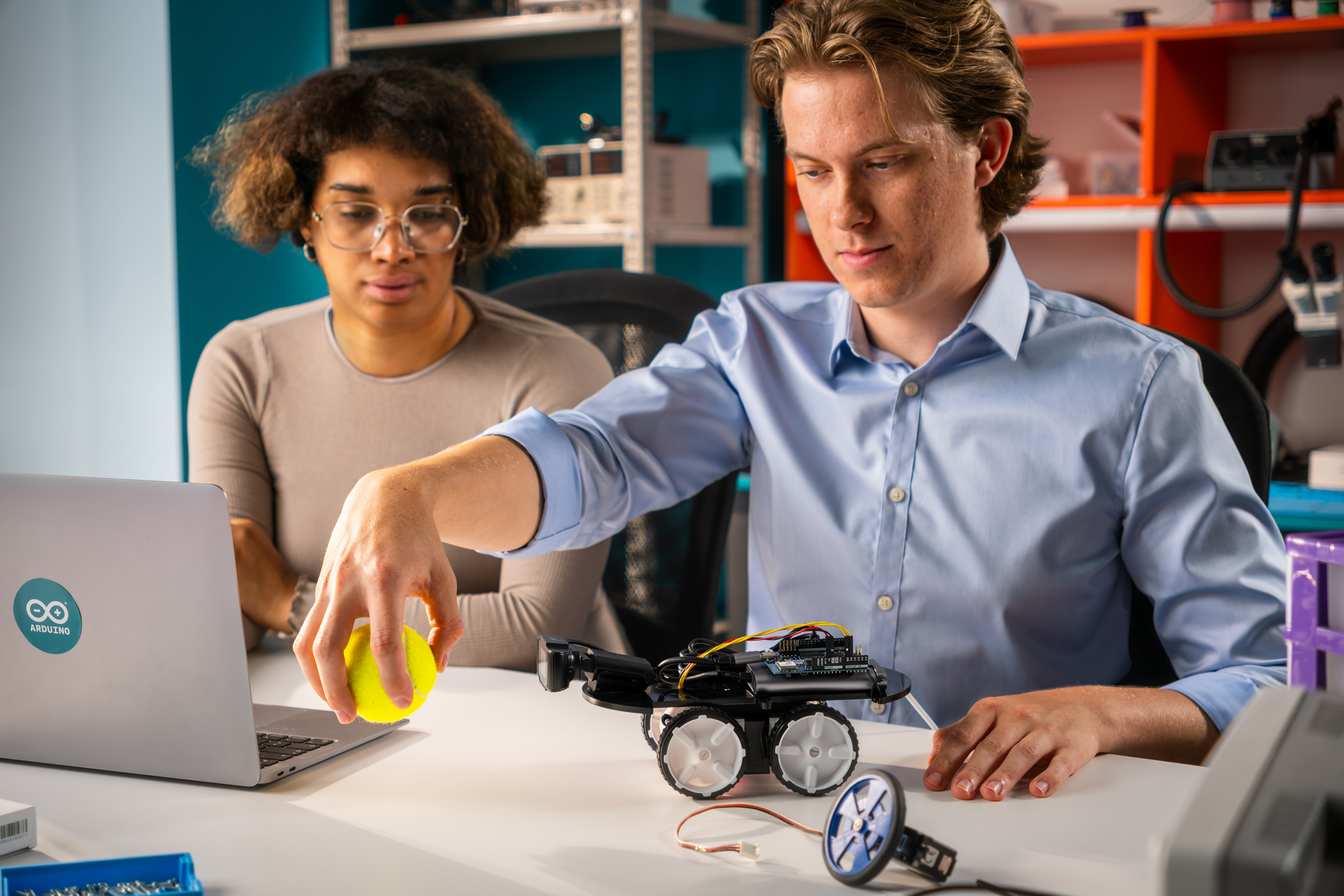
Physical AI refers to intelligent systems that interact with the real world through hardware.
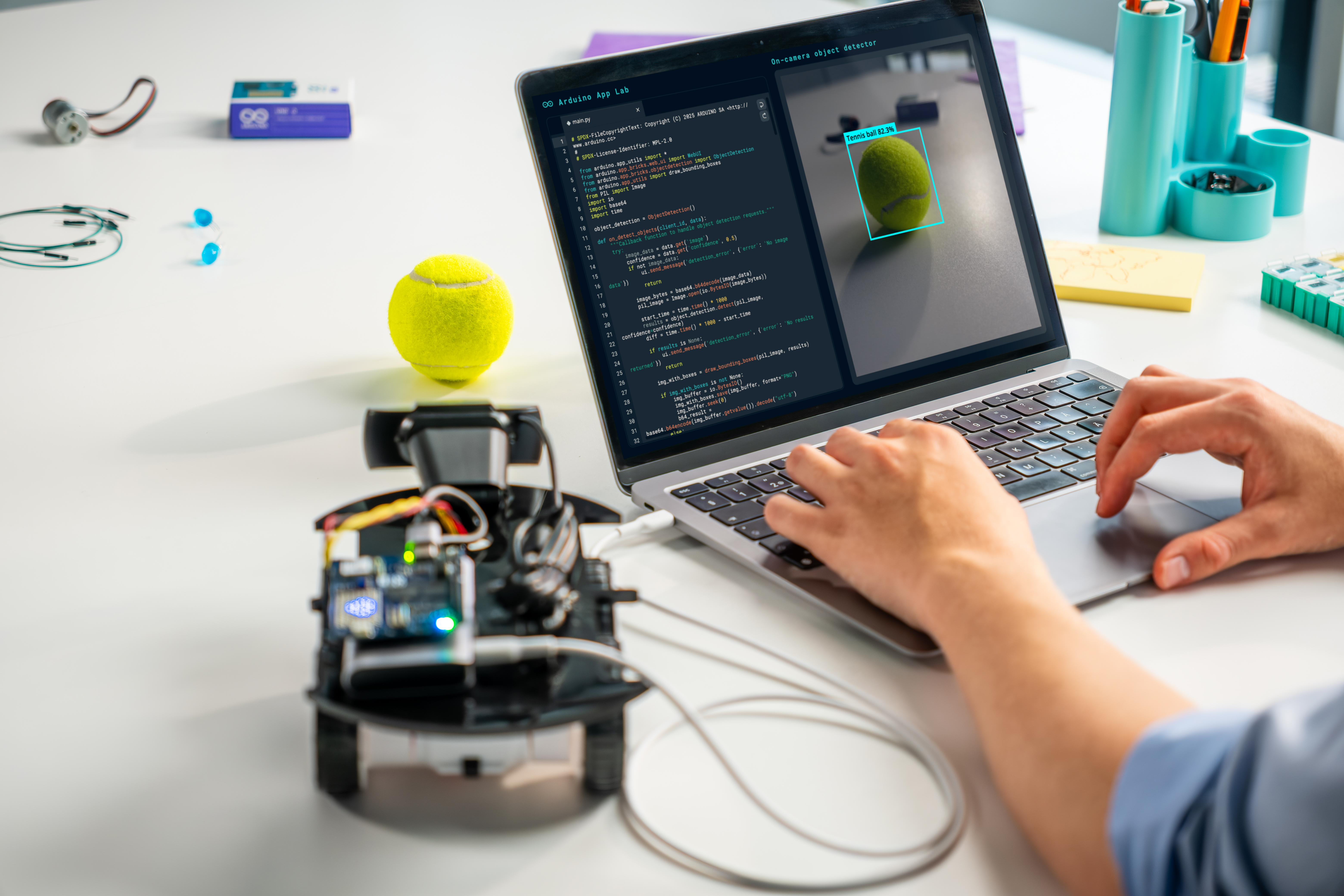
Examples include:
-
Smart home automation systems
-
AI-powered robots
-
Gesture recognition devices
-
Predictive maintenance systems
-
Environmental monitoring systems
-
Industrial automation solutions
-
AI-based security systems
-
Smart agriculture projects
-
Autonomous navigation systems
These systems combine:
-
Sensors
-
Embedded hardware
-
AI models
-
Real-time processing
-
Actuators and automation
The Arduino Physical AI Challenge India 2026 focuses specifically on these kinds of practical AI applications.
Arduino UNO Q — The Core Platform
All projects in the competition must use the Arduino UNO Q as the main platform.
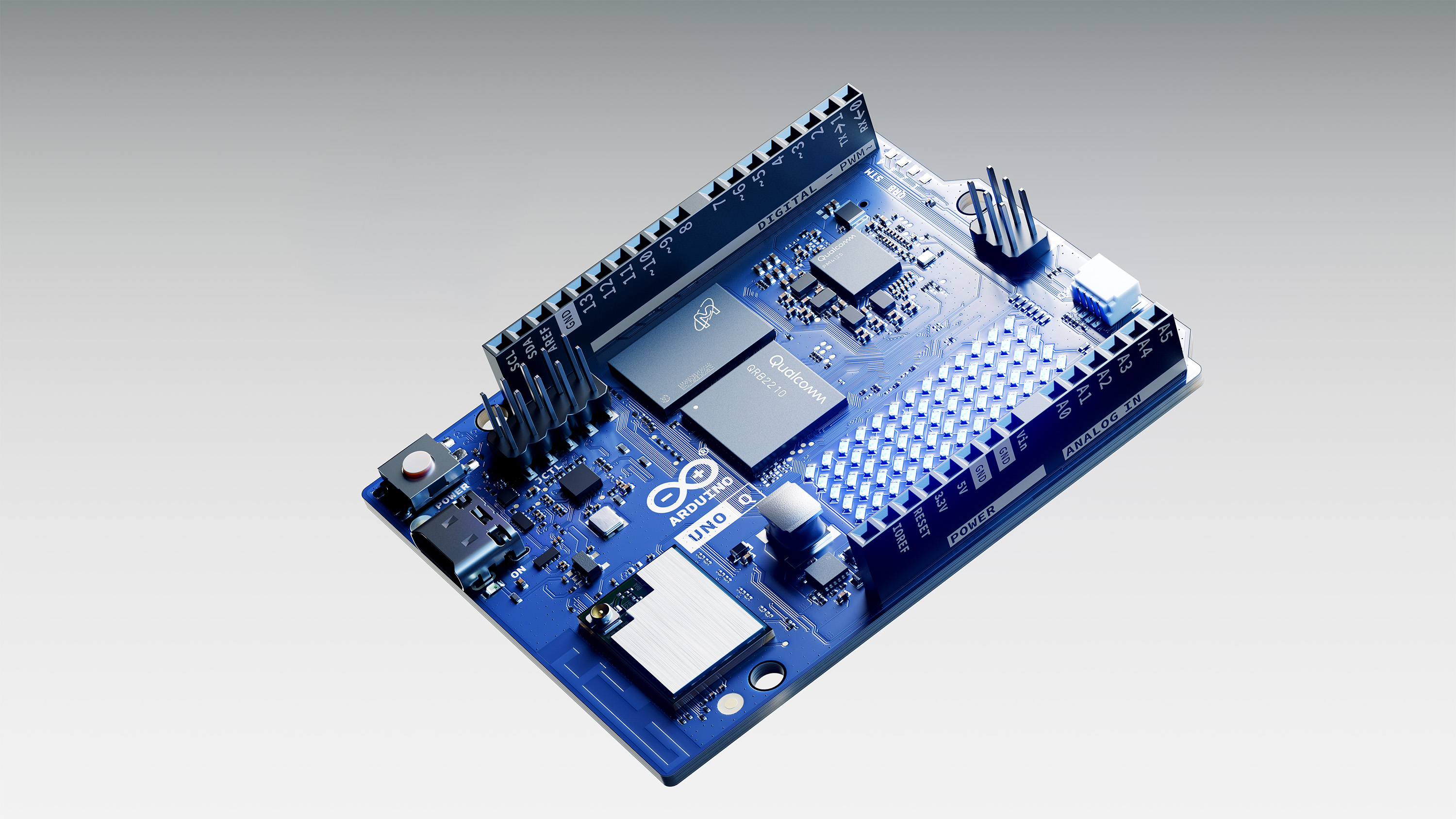
The Arduino UNO Q enables developers to build advanced embedded AI and automation systems while maintaining the simplicity and flexibility Arduino is known for.
Participants can additionally use:
-
Cameras
-
Displays
-
Edge AI modules
-
Motors
-
Sensors
-
Cloud APIs
-
Internet services
-
Other supporting hardware
However, the Arduino UNO Q must remain the central platform of the project.
Competition Categories
Participants can submit projects under three major categories.
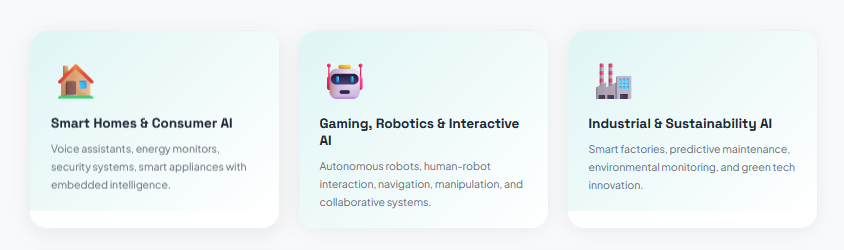
- Smart Homes & Consumer AI
Build intelligent systems for homes and consumers.
Examples include:
-
Voice assistants
-
Smart appliances
-
AI-powered security systems
-
Home automation
-
Energy monitoring systems
-
Smart lighting systems
2. Robotics & Interactive Systems
Build robotics and human-machine interaction systems.
Examples include:
-
Autonomous robots
-
AI gaming systems
-
Navigation systems
-
Gesture-controlled robots
-
Interactive machines
-
Human-machine interfaces
3. Industrial & Sustainability
Focus on industrial automation and sustainability solutions.
Examples include:
-
Predictive maintenance
-
Environmental monitoring
-
Smart factories
-
Green technology
-
Industrial AI systems
-
Smart energy management
Who Can Participate?
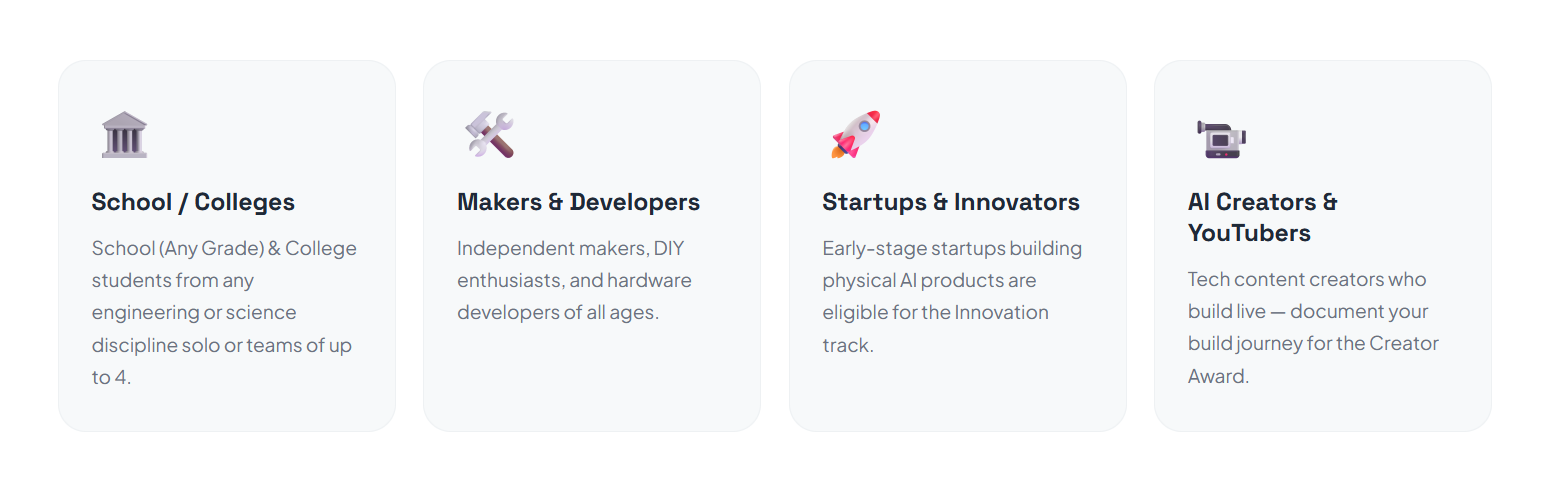
The competition is open to Indian residents.
Eligible participants include:
-
School students
-
College students
-
Independent makers
-
Developers
-
Startups
-
Hardware innovators
-
AI creators
-
Tech YouTubers
Participants can join:
-
Individually
-
Or in teams of up to 4 members
Teams can also include members from different cities, schools, or colleges.
Prize Pool — Rs. 30 Lakhs+
One of the biggest highlights of the competition is the massive prize pool.
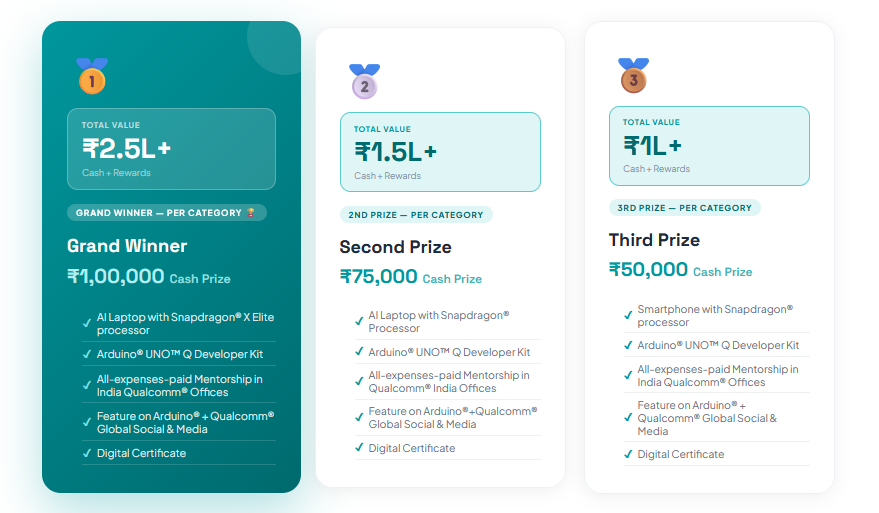
Main Category Winners
Gold Winners (3 Winners)
Each category will have one Gold Winner receiving:
-
Rs. 1,00,000 cash prize
-
Snapdragon X Elite Laptop
-
Arduino UNO Q Kit
-
All-expenses-paid mentorship at Qualcomm offices
-
Feature on Arduino & Qualcomm Social media platforms
-
Digital Certificate
Silver Winners (3 Winners)
-
Rs. 75,000 cash prize
-
Snapdragon AI Laptop
-
Arduino UNO Q Kit
-
All-expenses-paid mentorship at Qualcomm offices
-
Feature on Arduino & Qualcomm Social media platforms
-
Digital Certificate
Bronze Winners (3 Winners)
-
Rs. 50,000 cash prize
-
Snapdragon Phone
-
Arduino UNO Q Kit
-
All-expenses-paid mentorship at Qualcomm offices
-
Feature on Arduino & Qualcomm Social media platforms
-
Digital Certificate
Special Awards
The competition also includes several special award categories.
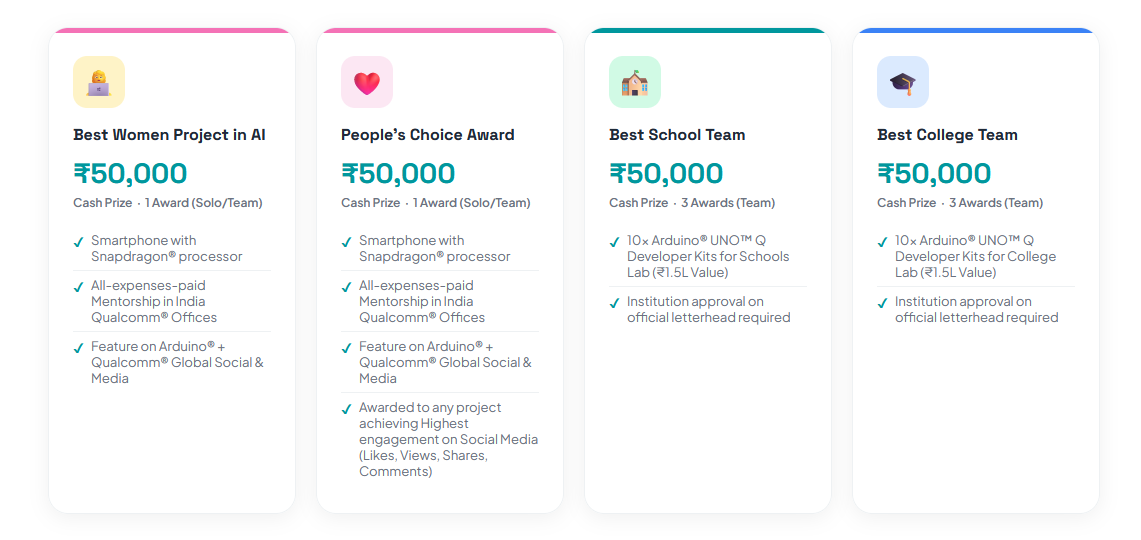
Best Women Project in AI
-
Rs. 50,000 cash
-
Snapdragon Phone
-
All-expenses-paid mentorship at Qualcomm offices
-
Feature on Arduino & Qualcomm Social media platforms
People’s Choice Award
This award is based on public engagement and community response across platforms like:
-
YouTube
-
Instagram
-
LinkedIn
Metrics may include:
-
Views
-
Likes
-
Shares
-
Comments
-
Audience retention
-
Organic engagement
Participants are encouraged to document and share their project journey online.
Best School Team
-
Rs. 50,000 cash
-
10 Arduino UNO Q kits for school lab
Best College Team
-
Rs. 50,000 cash
-
10 Arduino UNO Q kits for college lab
Additionally, all winners will receive a 1-year subscription to EFY magazine.
Important Dates
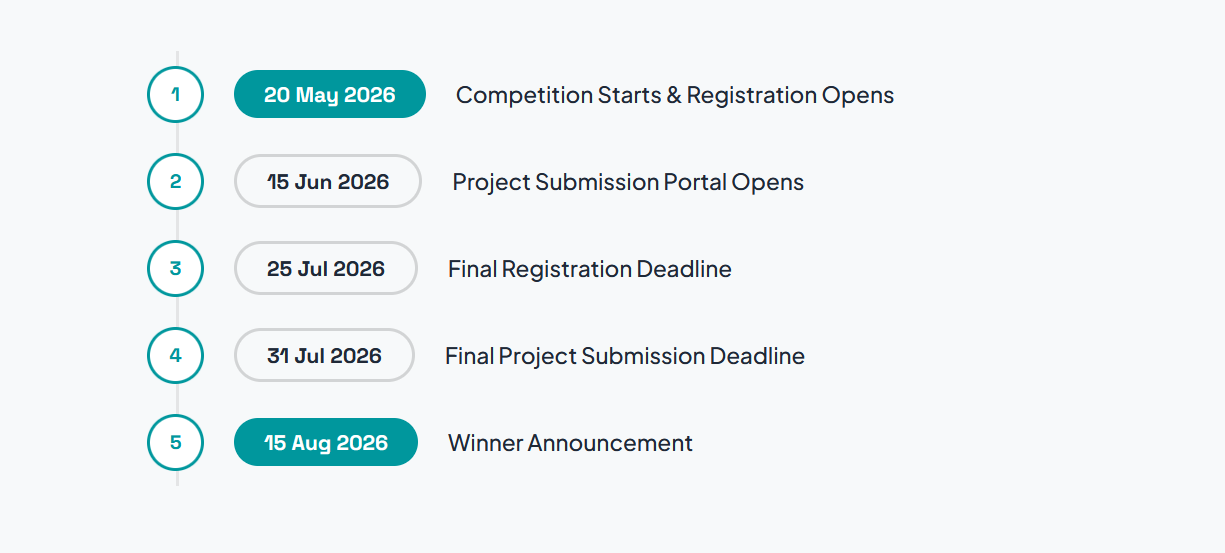
Competition Timeline
|
Event |
Date |
|
Competition Starts |
20 May 2026 |
|
Submission Portal Opens |
15 June 2026 |
|
Registration Deadline |
25 July 2026 |
|
Submission Deadline |
31 July 2026 |
|
Winner Announcement |
15 August 2026 |
How to Participate
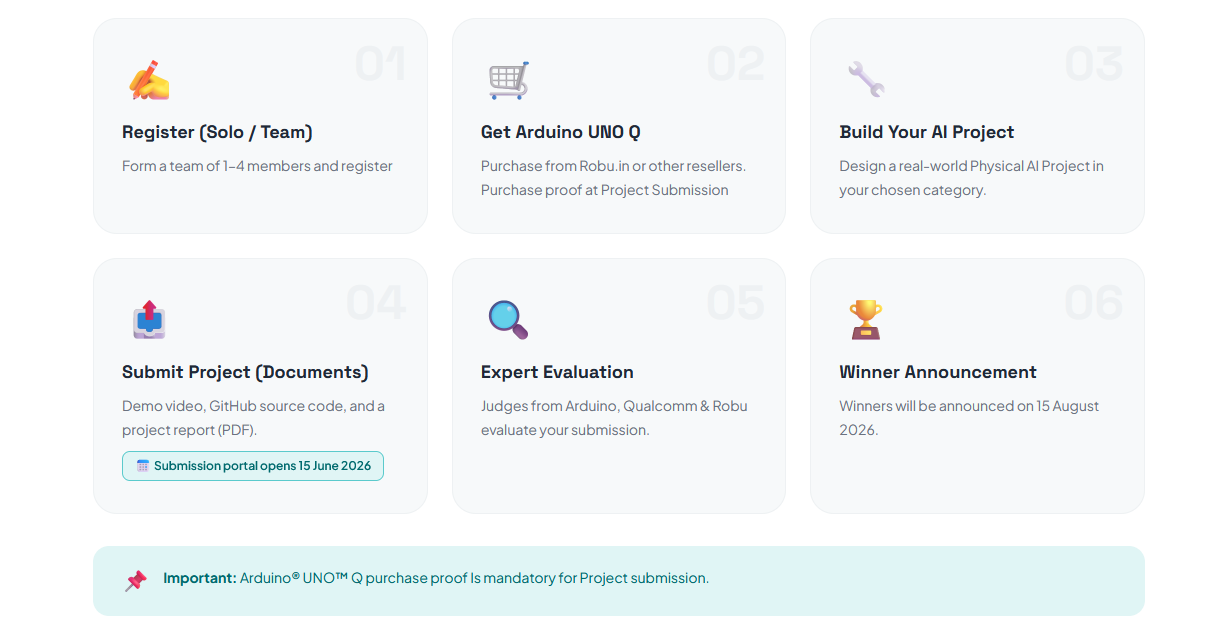
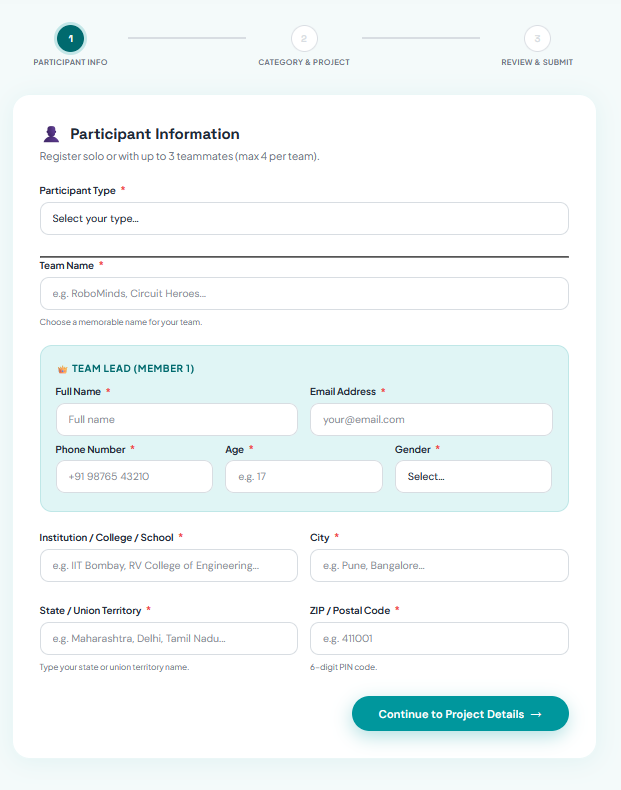
Step 1: Register Your Team
Register individually or as a team of up to 4 members.
Participants will receive a unique Team ID after registration.
Step 2: Buy Arduino UNO Q
Purchase the Arduino UNO Q from:
-
Authorized resellers
Keep the purchase invoice safe because it is mandatory during submission.
Step 3: Build Your Physical AI Project
Design and build your project using Arduino UNO Q.
Participants are free to explore any innovative idea within the competition themes.
Step 4: Submit Your Project
Participants must submit:
-
Demo video
-
PDF project report
-
GitHub repository link (optional but recommended)
Step 5: Expert Evaluation
Projects will be reviewed by judges from:
-
Arduino
-
Qualcomm
Top teams will move to the final online evaluation round.
Step 6: Winner Announcement
Winners will be announced on 15 August 2026.
Project Submission Requirements
Demo Video Requirements
The demo video should:
-
Be 5-10 minutes long
-
Must clearly demonstrate the project’s functionality, assembly, and components used.
-
Date Verification Requirement
At the start of the video, clearly show the current date using either:
• A newspaper showing the current date, or
• A Google search result displaying today's date.
This must be shown before the project demonstration begins.
-
The video must be continuous and unedited with no cuts or jumps; a single uninterrupted recording
- Video must be publicly accessible (not private or unlisted).
▸ Submit as a shareable video link (YouTube, Google Drive, etc.).
Supported platforms include:
-
YouTube
-
Google Drive
-
Vimeo
Note
If using Google Drive, the sharing permission must be set to "Anyone with the link can view.” Private or restricted links
may lead to disqualification.
Project Report Requirements
The PDF report should include:
-
Team details
-
Project title
-
Project abstract
-
Components used
-
System workflow
-
Circuit diagram
-
Source code
-
Project images
-
Conclusion
-
GitHub repository
-
References
All submissions must be in English.
Evaluation Criteria
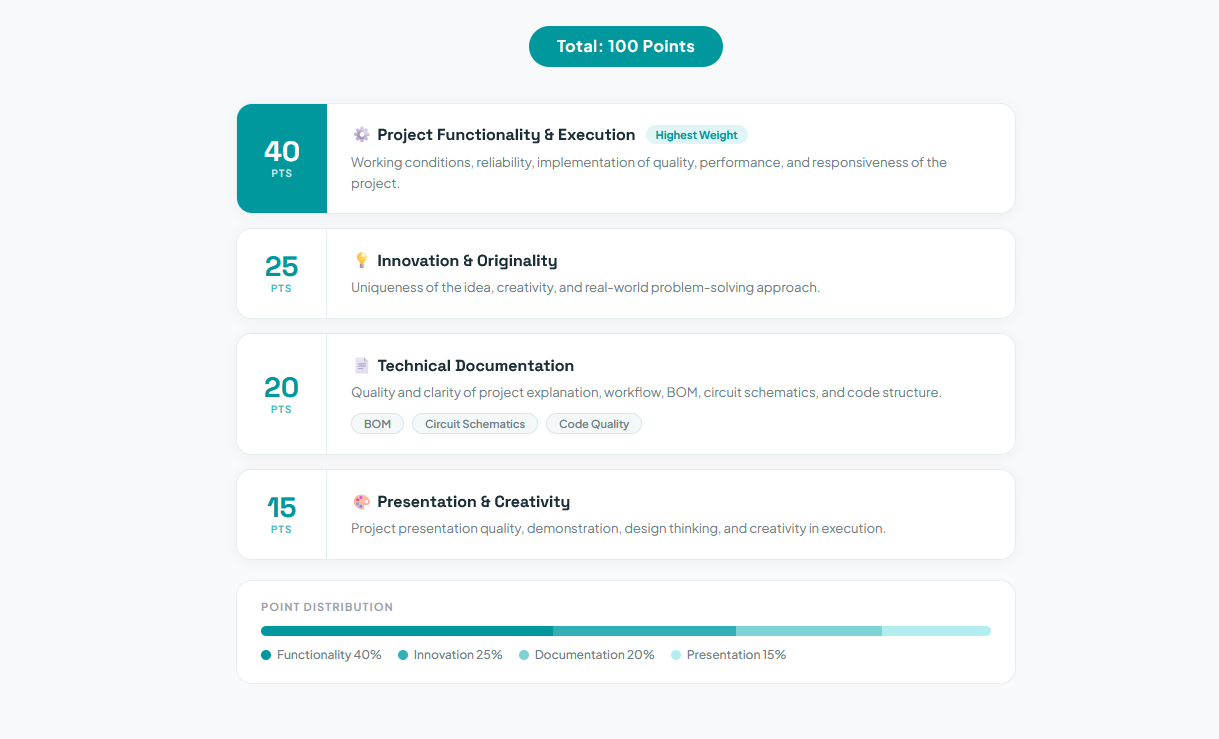
Projects will be evaluated out of 100 points.
|
Criteria |
Points |
|
Functionality & Execution |
40 |
|
Innovation & Originality |
25 |
|
Technical Documentation |
20 |
|
Presentation & Creativity |
15 |
Final Evaluation Round
Top shortlisted teams will attend an online video-call evaluation.
Participants must:
-
Present the project live
-
Demonstrate working functionality
-
Explain technical implementation
-
Answer judge questions
Failure to attend may result in disqualification.
Rules and Originality Guidelines
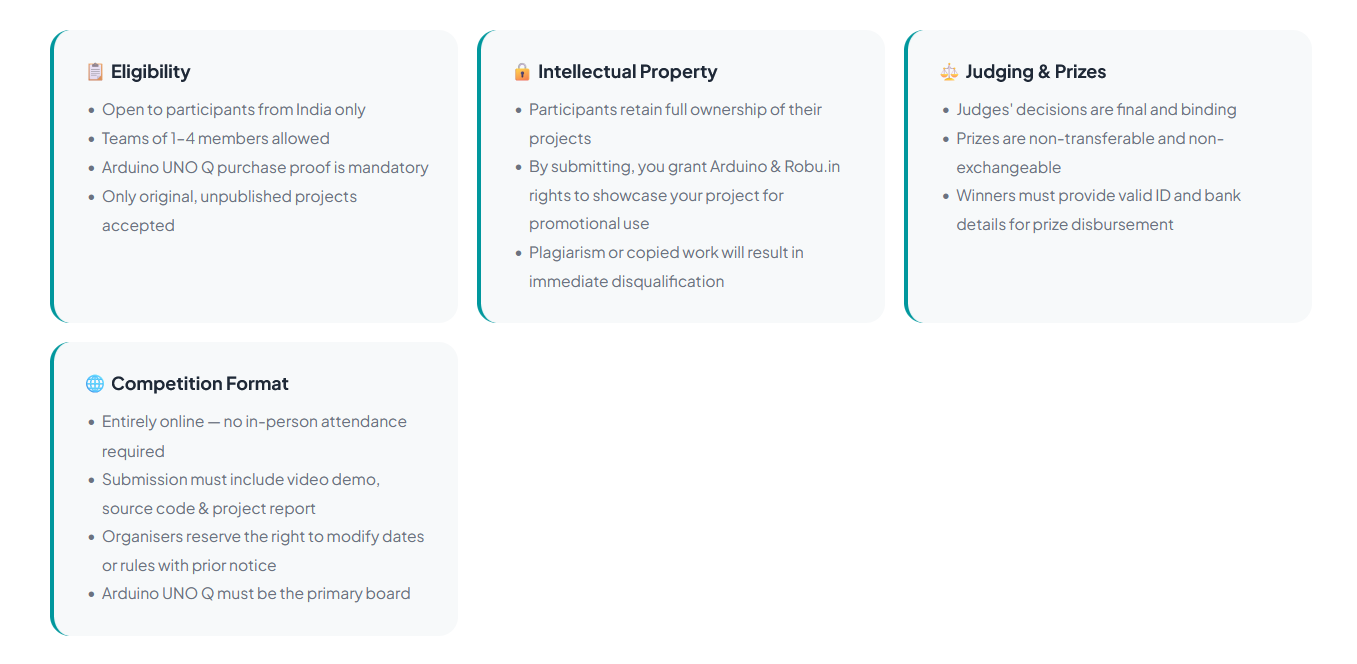
Projects must be:
-
Original
-
Developed during the competition period
-
Related to Physical AI
-
Built around Arduino UNO Q
Participants may use:
-
AI tools like ChatGPT
-
GitHub Copilot
-
Open-source libraries
-
Cloud APIs
-
Pre-trained AI models
However, copied implementations or fully AI-generated submissions without participant understanding may be disqualified.
Why You Should Participate
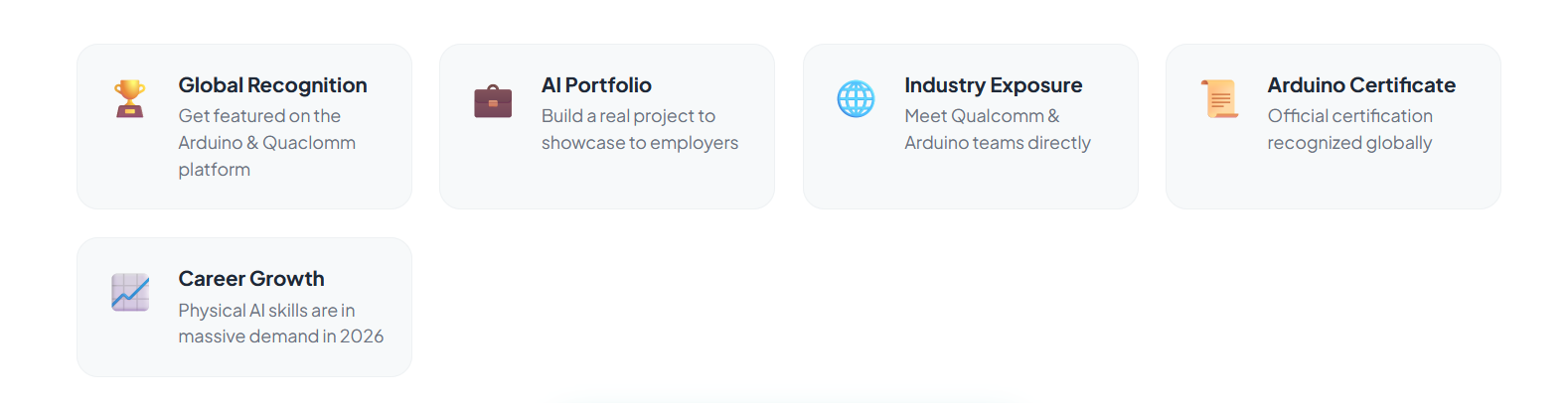
National Recognition
Get featured on official Arduino and Qualcomm platforms.
Build Your Portfolio
Showcase real engineering skills to recruiters, colleges, and investors.
Learn Practical AI & Embedded Systems
Gain hands-on experience in:
-
Embedded AI
-
Robotics
-
IoT
-
Automation
-
Edge AI systems
Mentorship Opportunities
Winners receive mentorship opportunities at Qualcomm offices.
Networking & Exposure
Connect with industry experts, developers, creators, and innovators across India.
Frequently Asked Questions
Is Arduino UNO Q mandatory?
Yes. It must be the core platform of the project.
Can we participate as a team?
Yes. Teams can have up to 4 members.
Is GitHub mandatory?
No, but it is highly recommended.
Can we use Raspberry Pi or cloud APIs?
Yes, as supporting hardware/services.
Can school students participate?
Yes.
Is there any registration fee?
No. Participation is completely free.
Final Thoughts
The Arduino Physical AI Challenge India 2026 is more than just a competition.
It is an opportunity for Indian innovators to build real-world AI systems, gain national exposure, and showcase practical engineering talent.
Whether you are:
-
A student learning embedded systems
-
A robotics enthusiast
-
A startup building AI hardware
-
A content creator documenting projects
-
Or an engineer passionate about innovation
This competition gives you a platform to build, learn, compete, and grow.
If you have an idea that combines AI with hardware, this is your chance to bring it to life.
Official Platforms



Leave a Comment Your email address will not be published. Required fields are marked*